


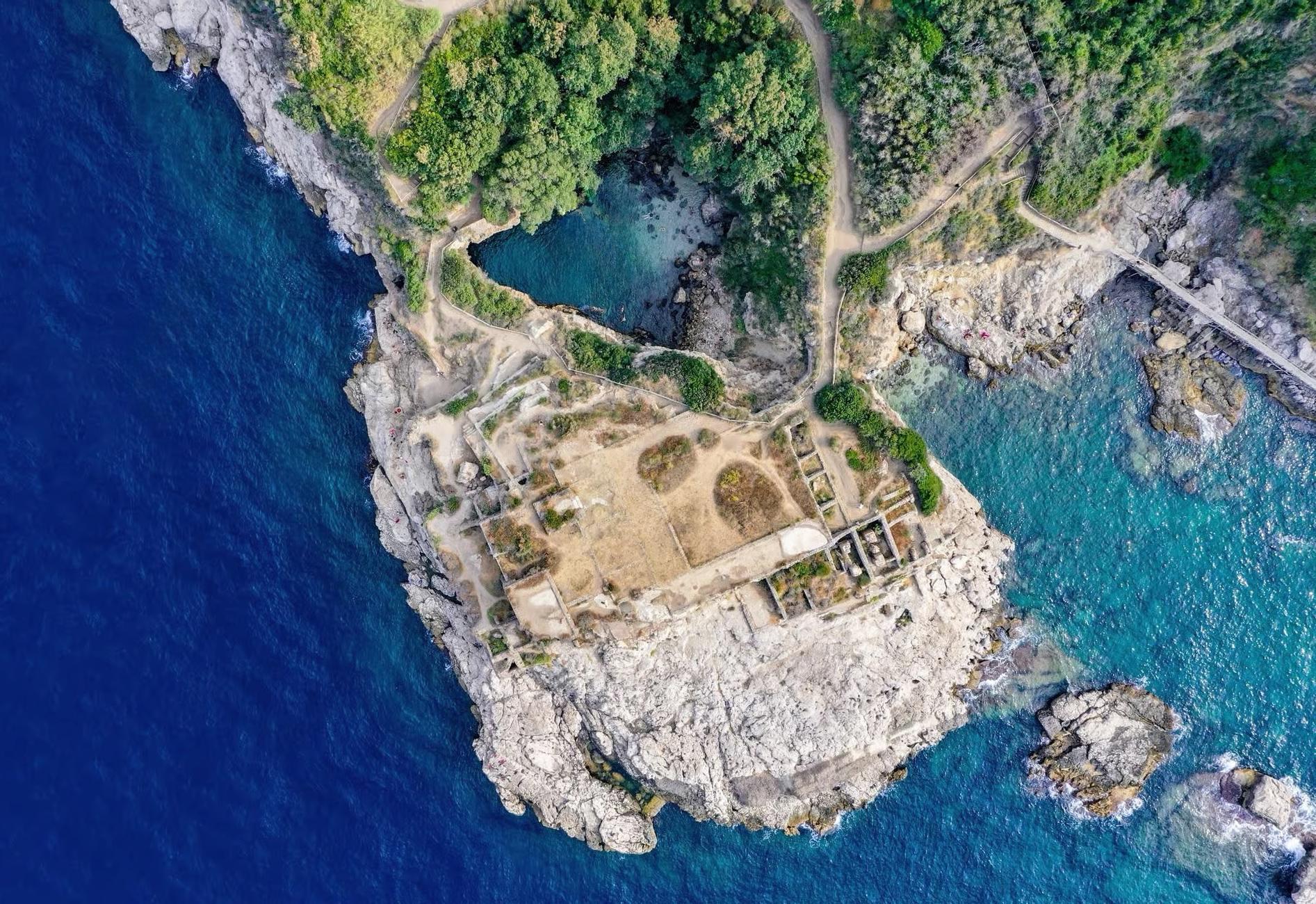
A place of otium since classical antiquity
Campania—home to ancient Greek settlements—was long celebrated for its rich culture and traditions, as well as its fertile soil and mild climate. Its strategic harbors made it a key hub of Magna Graecia’s trade: the Greek historian Polybius praised the region, but it was Pliny the Elder who immortalized it as “Campania felix”—the fortunate, or happy, land.
The entire coastline was adored by Roman aristocrats, who built their villas of leisure there. In the first century AD, the geographer Strabo described the stretch between Cape Misenum and Cape Colonna (today’s Punta Campanella) as a continuous string of residences, plantations, and towns. Emperor Augustus acquired Capri and even sent his adopted son into exile in a coastal villa at Sorrento, while his successor Tiberius moved his imperial court to Capri.
Today, twenty‑four ancient villa sites line the coast from what was once the city of Aequa (now Vico Equense) to Punta Campanella. These estates featured courtyards, panoramic exedras, sea‑level terraces—both open and tunneled—fountains, fishponds carved into the shoreline, docking quays, and private harbors.
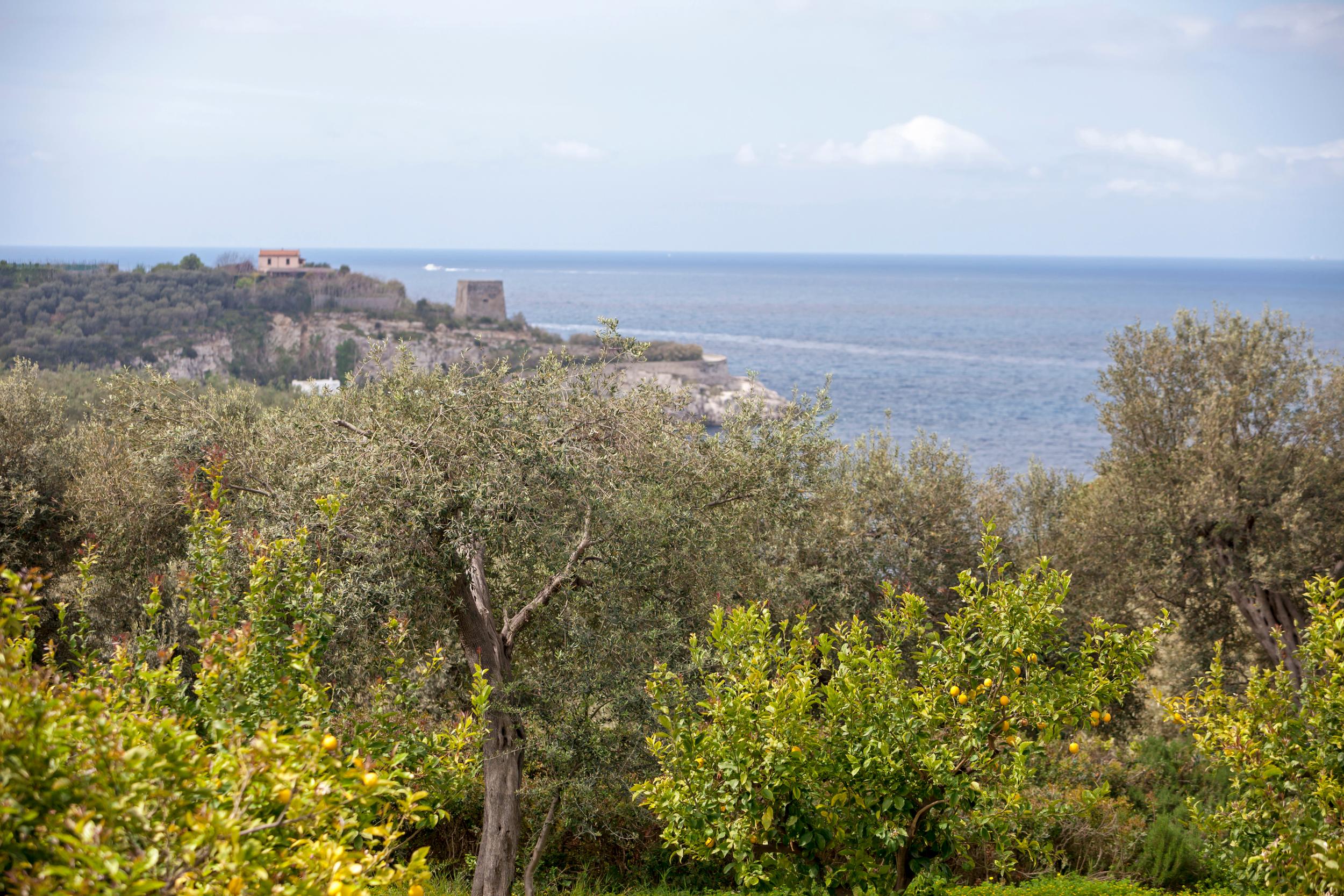
At Relais Regina Giovanna, we carry forward over two millennia of agricultural tradition.
The estate occupies what was once the pars rustica—the working farmland—of the 1st-century AD Roman Villa of Capo di Sorrento. Traces of this ancient legacy remain, including two large cisterns still visible on the grounds, once used to collect spring water for irrigation. The villa’s maritime sector stood at the tip of the promontory, beyond what is now known as the Baths of Queen Giovanna, while the residential domus overlooked the cultivated hills above. The two areas were linked by a network of ramps, covered walkways, staircases, and terraced gardens.
The estate boasted a small harbor for landing boats, accessible by sea and from the cliff above. A thermal complex likely lay near the cisterns, though its precise location remains debated—perhaps where our vegetable fields now thrive.
Then as now, the villa was a working estate: its negotium embraced both land and sea. The fields produced oil and Sorrento’s renowned wine, while the waters yielded fish, crustaceans, and shellfish.
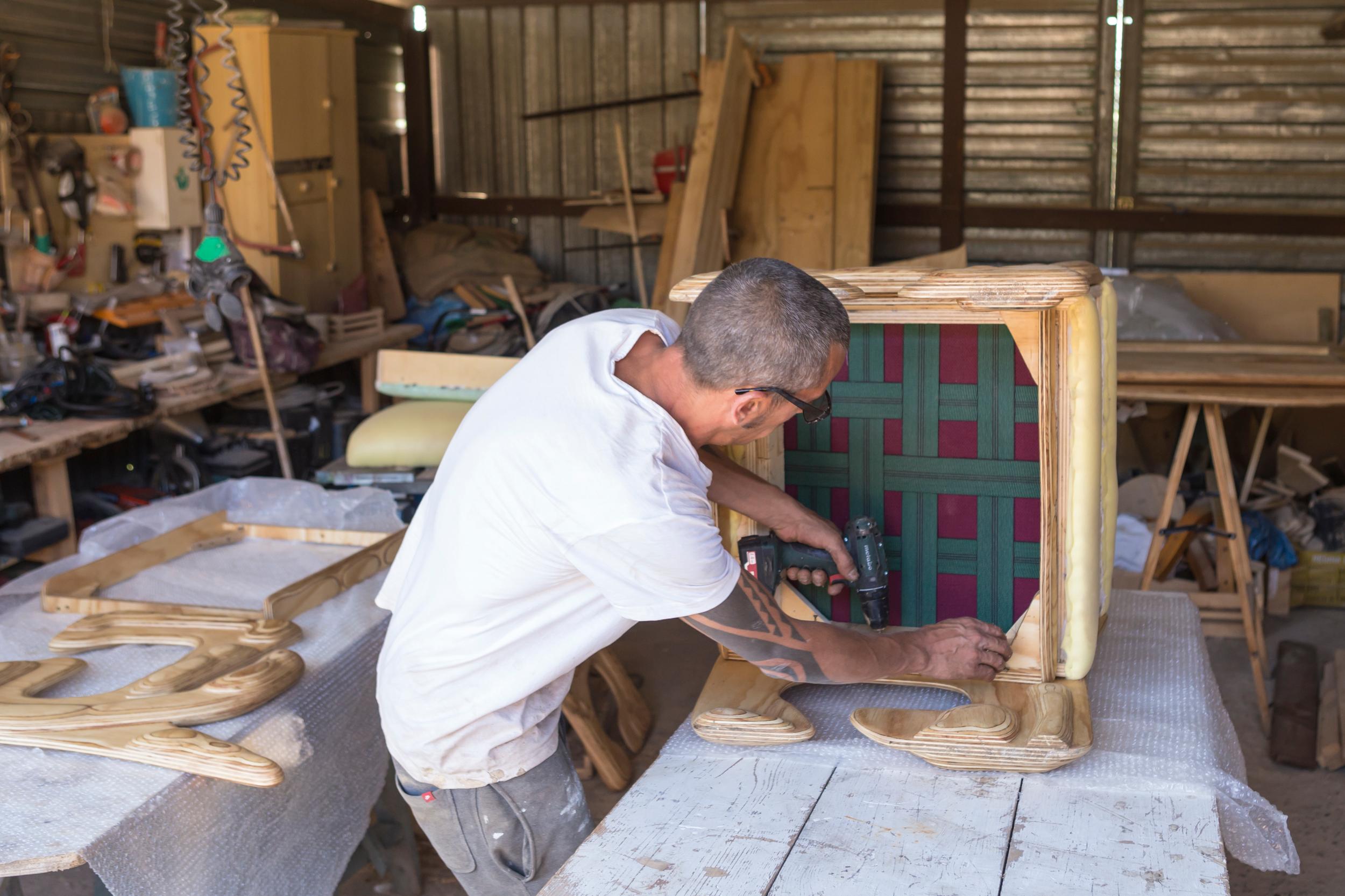
Indoors and out, the estate is dotted with works by local and visiting artisans and artists—all created in residence: traces of life and beauty inspired by the place and its unique atmosphere.
